
Understanding the Steam Jacketed Kettle: Thermodynamic Efficiency in Batch Processing
In modern commercial food processing, pharmaceutical compounding, and chemical manufacturing, the Steam Jacketed Kettle represents the industrial standard for continuous batch boiling, concentration, stewing, and thermal blending. Unlike direct-fired cooking vessels or simple jacketed tanks, a professional steam jacketed kettle utilizes the latent heat of saturated steam sealed within a double-walled hemispherical chamber. This design delivers exceptionally rapid, uniform, and precise thermal energy transfer directly into the target product mass.
At EAC Machinery Co., Ltd., our process engineers design steam kettles that maximize thermal boundary conduction while minimizing energy consumption. When steam condenses inside the jacket space, it releases its latent heat of vaporization ($h_{fg}$) at a constant saturation temperature corresponding to the operational steam pressure. Because latent heat transfer is significantly more effective than sensible heat transfer, steam jacketed vessels cook batches up to 40% faster than electric thermal oil jacketed systems, preventing local hot spots and preserving product flavor, color, and nutritional value.
Saturated steam at 0.3 MPa (approx. 3 bar gauge) delivers a boiling point temperature of approximately 143.6°C with a latent heat capacity of roughly 2,138 kJ/kg. In contrast, thermal liquid oil heating relies strictly on sensible heat energy ($Q = m \cdot C_p \cdot \Delta T$), requiring much larger volume flow rates and higher surface contact temperatures. This key thermodynamic property makes steam jacketed kettles manufactured by EAC Machinery Co., Ltd. the preferred selection for fast-paced industrial cookery.
EAC Steam Jacketed Kettle Product Recommendations & Technical Lineup
To satisfy diverse processing requirements—from low-viscosity broth concentration to thick, sticky chili paste cooking—EAC Machinery Co., Ltd. provides three core configurations of steam jacketed cooking vessels. Each series is engineered with heavy-gauge sanitary stainless steel and certified under international pressure vessel directives.
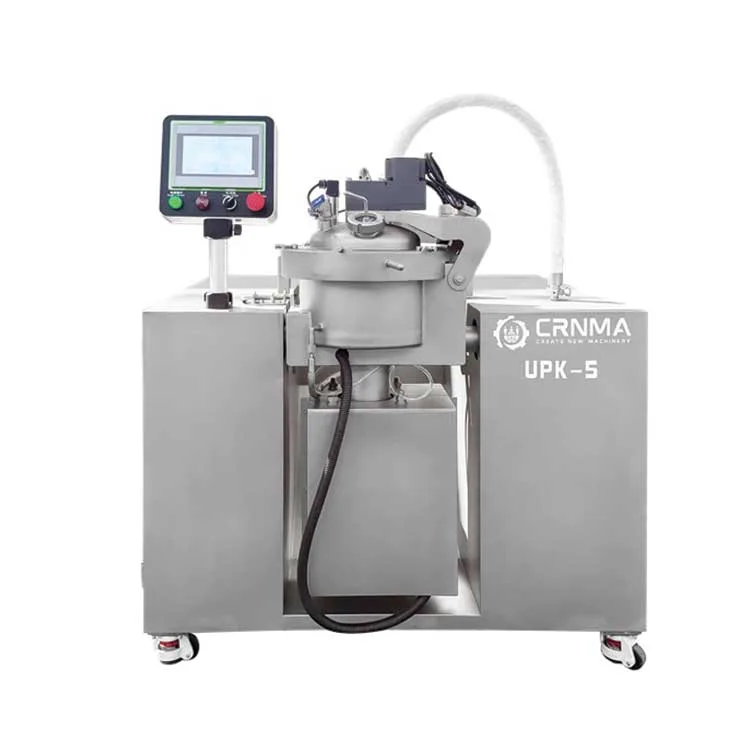
Tilting Steam Jacketed Kettle (EAC-SJK-T Series)
Equipped with a precision worm-gear manual or hydraulic pouring mechanism, the EAC-SJK-T series allows smooth 90° vessel tilting for easy discharge of thick sauces, jams, and solid-liquid mixtures.
- Capacity Range: 50L to 1,000L per batch
- Worm-gear tilting with lock safety
- PTFE wall-scraping agitator available
- Full hemispherical steam jacket
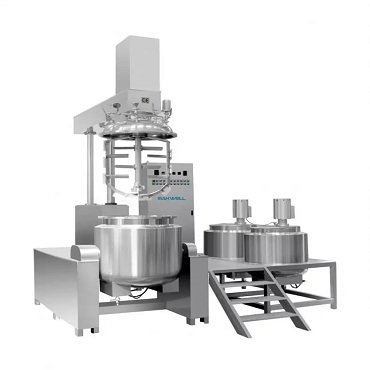
Stationary Steam Jacketed Kettle (EAC-SJK-S Series)
Designed for liquid beverages, soups, syrups, and clean fluids. Features a fixed vertical structure with a bottom conical or dished outlet for direct piping connection to filling lines.
- Capacity Range: 100L to 3,000L high volume
- Sanitary Tri-clamp bottom discharge valve
- High thermal throughput efficiency
- Dual CIP spray ball compatible design
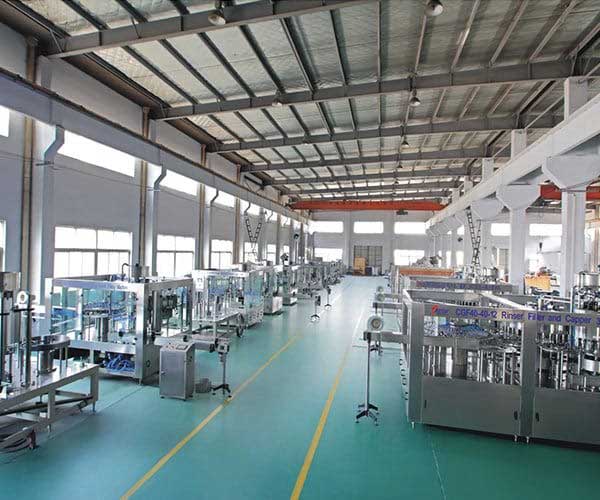
Vacuum Steam Jacketed Kettle (EAC-SJK-V Series)
Engineered for low-temperature thermal concentration of heat-sensitive compounds, pharmaceuticals, and premium fruit preserves under negative pressure condition.
- Vacuum rating up to -0.09 MPa
- Preserves fresh flavor & natural color
- Planetary agitation with dual scrapers
- Integrated steam control valve manifold
Comprehensive Technical Specification Matrix
The following table details standard production parameters for EAC Machinery Co., Ltd. steam jacketed kettles. Custom volumes, higher working pressures, and specialized motor configurations are available upon technical consultation.
| Model Specification | EAC-SJK-100 | EAC-SJK-300 | EAC-SJK-500 | EAC-SJK-1000 |
|---|---|---|---|---|
| Nominal Working Volume (L) | 100 L | 300 L | 500 L | 1000 L |
| Design Steam Pressure (MPa) | 0.09 – 0.25 MPa | 0.09 – 0.35 MPa | 0.09 – 0.40 MPa | 0.09 – 0.45 MPa |
| Steam Consumption (kg/h) | 25 - 35 kg/h | 70 - 90 kg/h | 120 - 150 kg/h | 220 - 280 kg/h |
| Heating Surface Area ($m^2$) | 0.65 $m^2$ | 1.45 $m^2$ | 2.10 $m^2$ | 3.60 $m^2$ |
| Agitator Power (kW) | 0.75 kW | 1.5 kW | 2.2 kW / 3.0 kW | 4.0 kW / 5.5 kW |
| Agitator Rotation Speed (RPM) | 36 RPM (VFD Adjustable) | 36 RPM (VFD Adjustable) | 0 - 45 RPM (VFD Control) | 0 - 45 RPM (VFD Control) |
| Inner Vessel Material | SUS304 / SUS316L | SUS304 / SUS316L | SUS316L Sanitary | SUS316L Sanitary |
| Internal Surface Finish | Mirror Polish Ra < 0.4 μm | Mirror Polish Ra < 0.4 μm | Mirror Polish Ra < 0.4 μm | Mirror Polish Ra < 0.4 μm |
Engineering Deep-Dive: Heat Transfer Dynamics & Scraper Blade Mechanics
For processing managers evaluating suppliers, understanding the internal mechanics of a steam jacketed kettle is vital for preventing unscheduled downtime, burnt batches, and excessive energy bills. EAC Machinery Co., Ltd. embeds advanced heat transfer principles into every vessel structure.
1. Heat Conduction & Overall Heat Transfer Coefficient ($U$)
The rate of thermal energy transferred across the inner jacket wall into the product batch is governed by Fourier’s law of heat conduction and convective boundary layer theory:
Where $Q$ is the heat transfer rate (Watts), $U$ is the overall heat transfer coefficient ($W/m^2\cdot K$), $A$ is the effective jacket contact surface area ($m^2$), and $\Delta T_{lm}$ is the logarithmic mean temperature difference between the condensing steam and the liquid mass. To maximize $U$, EAC Machinery Co., Ltd. precision-grinds inner shell plates, eliminating air pockets and maintaining constant wall thickness under pressure.
2. Continuous Scraper Agitation & Boundary Layer Destruction
When heating high-viscosity foods—such as caramel, tomato paste, cheese dips, or starch-based sauces—the stationary fluid adjacent to the hot metal wall overheats rapidly. This forms a stagnant thermal boundary layer that acts as an insulator, reducing the overall heat transfer coefficient ($U$) by up to 70% and burning the product.
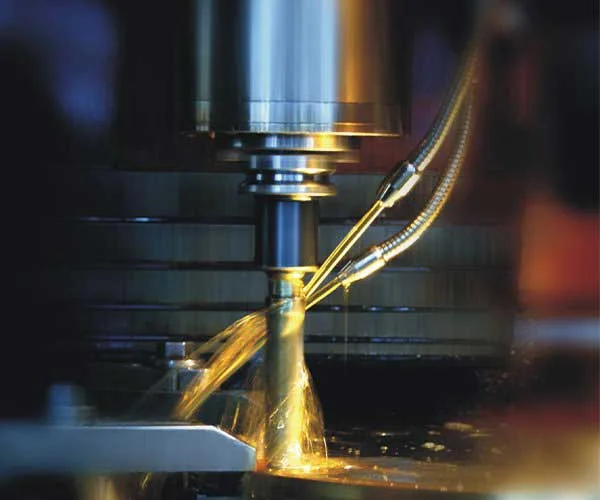
To solve this, EAC steam jacketed kettles incorporate custom-engineered PTFE (Teflon) Scraper Blades attached to an anchor or planetary agitator frame. The spring-loaded or centrifugal force scrapers flex continuously against the curved hemispherical wall, sweeping hot product away from the surface and replacing it with cooler mass. This dynamic fluid replacement maintains high turbulence, elevates the convective heat transfer coefficient, and guarantees zero scorching.
3. Condensate Removal Mechanics & Steam Trap Selection
A common failure mode in steam jacketed kettle operation is waterlogging—where condensed steam collapses inside the jacket space because of inadequate trap drainage. A flooded steam jacket acts as an insulating water barrier, dropping cooking speeds dramatically. EAC Machinery Co., Ltd. outfits every steam kettle setup with high-capacity Float & Thermostatic (F&T) or Thermodynamic Steam Traps with integrated air vents to rapidly purge non-condensable air and continuous liquid condensate.
Enterprise Advantages: Why Global Processors Partner with EAC Machinery Co., Ltd.
Selecting EAC Machinery Co., Ltd. as your OEM/ODM steam jacketed kettle manufacturer grants your plant direct access to top-tier sanitary engineering, reliable pressure safety, and complete line integration capabilities.
Years Manufacturing Excellence
Over a decade and a half of dedicated expertise constructing food-grade process kettles, vacuum emulsifiers, and turnkey filling lines exported to over 50 countries worldwide.
Sanitary Mirror Polishing
All contact parts (SUS304/SUS316L) undergo multi-stage automatic robotic and hand polishing, achieving surface roughness below Ra 0.4 μm to meet stringent 3A, cGMP, and EHEDG standards.
Safety Inspection & Test
Every steam jacket undergoes non-destructive testing (NDT), X-ray weld inspection, and 1.5x working pressure hydrostatic testing certified under CE-PED directives.
Tailored Agitator Drives
From single-direction anchor agitators to dual-shaft counter-rotating planetary mixers, we customize motor gearboxes (SEW/ABB/Siemens) to match your exact fluid viscosity.
Filling Line Integration
We design our kettles to connect directly into downstream automatic filling, capping, cartoning, and palletizing systems produced in our own manufacturing plant.
Comprehensive Warranty
Backed by a 2-year warranty on major components, lifetime spare parts supply, and 24-hour rapid technical response via direct video diagnostic links.
Future Development & Procurement Trends in Steam Jacketed Kettle Technology
As industrial food and pharmaceutical manufacturing transitions toward Industry 4.0 automation, sustainability, and strict carbon emission compliance, procurement officers must consider how processing equipment will adapt over the next decade. EAC Machinery Co., Ltd. is leading this technological shift through continuous R&D investments.
1. Smart Thermal Recipe Management & PID Steam Control
Modern processing facilities are phasing out manual steam valve wheels. Future-ready kettles incorporate pneumatic modulating steam valves linked to PLC touchscreens with multi-stage temperature profiling. Operators select a product recipe (e.g., "Strawberry Jam Batch B"), and the system automatically regulates steam inlet pressure, agitation speed, thermal hold times, and rapid cooling water injection.
2. Closed-Loop Condensate Heat Recovery & Flash Steam Savings
Energy cost reduction is a paramount driver for procurement teams. Next-generation steam jacket setups integrate localized flash-steam recovery systems. High-pressure condensate discharged from the kettle jacket is directed into flash vessels to generate low-pressure steam for facility space heating or pre-heating incoming CIP water, yielding up to 18% thermal efficiency gains.
3. Automated CIP/SIP Integration & Hygienic Seals
To minimize manual labor and batch turnaround times, future steam kettles feature integrated rotary clean-in-place (CIP) spray heads built into enclosed hygienic covers. Advanced double mechanical seals with sterile water flushes eliminate contamination risks along the agitator shaft entry point, essential for biological and preservative-free food production.
4. AI-Driven Viscosity & Torque Monitoring Systems
Integrating strain-gauge torque sensors into the agitator drive motor enables real-time viscosity calculation during cooking. As starch gelatinizes or sugar crystallizes, the PLC monitors torque feedback curves and dynamically adjusts motor speed, steam input, or signals batch completion without requiring manual operator sampling.