
Packaging Machinery Blog & Insights
Discover expert articles, technical guides, maintenance tips, and latest filling automation trends from EAC Machinery Co., Ltd.
Top Spout Pouch Filling Machine for Global Buyers
Table of Contents
For global buyers, choosing a Spout Pouch Filling Machine is not simply a search for higher speed. It is a decision about product protection, filling accuracy, cleaning time, and dependable production. A thick sauce behaves differently from liquid detergent. Fruit puree may leave residue around the nozzle. Small spouts can also slow filling when the machine design is poorly matched.
Nicholas Pesce, a packaging machinery executive at Viking Masek, has expressed a practical principle: “The right machine is selected around the product, not the other way around.” That idea matters when comparing servo-driven pumps, piston fillers, rotary systems, and automatic spout insertion units. Global buyers should examine pouch dimensions, filling volume, viscosity, temperature, sealing performance, and compressed-air requirements before choosing equipment.
A reliable Spout Pouch Filling Machine should offer stable dosing, accessible contact parts, clear operator controls, and simple changeover procedures. Stainless-steel construction helps, but it does not solve every maintenance problem. Operators still need practical cleaning access. They also need useful training and responsive technical support.
Speed looks impressive.
Yet consistency pays longer.
Some specifications may appear excellent on paper but perform differently in a busy factory. A careful evaluation should include sample trials, filled-pouch inspection, leak testing, and real product testing. No machine is perfect. Even an experienced buyer can overlook pouch stiffness or seasonal viscosity changes. This guide compares important machine features, supplier questions, and operating details to help buyers make a more informed and defensible investment.
Spout Pouch Filling Machine: Definition and Core Functions
Top Spout Pouch Filling Machine for Global Buyers
Spout Pouch Filling Machine: Definition and Core Functions
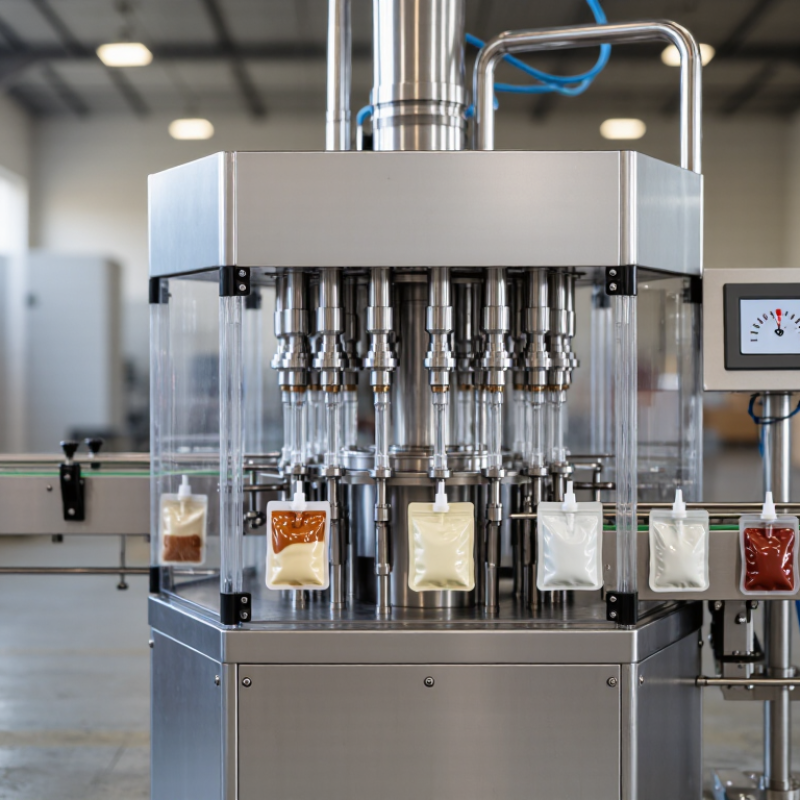
A spout pouch filling machine is equipment designed to fill liquid or semi-liquid products into preformed pouches. It controls pouch loading, positioning, filling, and sealing with coordinated mechanical movements. Some models also tighten caps or complete spout sealing. The filling nozzle must match the product’s viscosity and flow behavior. Water-like liquids need different settings from sauces, creams, or detergents. Accurate dosing reduces product loss and keeps pouch weights consistent.
Reliable machines usually include sensors, adjustable filling volumes, and programmable controls. These features help operators manage different pouch sizes without replacing the entire system. Contact parts should use suitable food-grade or corrosion-resistant materials when required. Cleaning access also matters. A narrow product channel can retain residue, even when the external surface looks clean. In practice, the first production trial rarely runs perfectly. Product temperature, foam, pouch stiffness, and cap alignment can change results.
Tips: Test real product samples before purchase. Check fill accuracy at low and high speeds. Inspect sealing strength after storage and transport simulation. Ask for cleaning procedures, spare-part availability, and operator training details. A machine may meet its specification yet perform poorly with your actual pouch material. Leave room for adjustment. That is often where dependable operation begins.
Machine Types and Suitable Pouch Applications
Choosing a top spout pouch filling machine starts with the pouch format and product behavior. Premade pouch machines suit packages with spouts already sealed in place. They can handle stand-up pouches for sauces, drinkable products, and household liquids. A rotary model moves pouches through stations for loading, opening, filling, and capping. It fits steady production runs where floor space matters. A linear model processes pouches in a straight line and can be easier to adjust for frequent size changes, though it may use more floor space.
Product texture matters. Thin liquids flow readily, while thicker sauces may need a positive-displacement pump and a wider filling nozzle. For products with small particles, check nozzle clearance and whether the filling system can reduce clogging. A machine’s stated speed is only part of the picture. Pouch stability, spout position, fill accuracy, and cleaning time affect real output. Details count.
Some systems include pouch forming and spout insertion, rather than filling premade pouches. These may suit manufacturers seeking control over pouch dimensions, but setup and changeovers can be more involved. Ask for trials using the actual pouch and product, then inspect seal quality and leakage after filling. I would not choose from a brochure alone. Even a well-specified machine can behave differently when a soft pouch wrinkles or a viscous product cools.
Key Features Global Buyers Should Evaluate
Top Spout Pouch Filling Machine for Global Buyers
When evaluating a spout pouch filling machine, buyers should inspect accuracy before chasing speed. A practical test uses water-like and viscous products. It checks fill variation across several pouch sizes. Stable dosing protects product quality and reduces costly giveaway. The filling range must match current production, not an imagined future order. Ask for recorded test results, not only brochure numbers.
Pouch handling deserves equal attention. Adjustable guides should hold thin film without wrinkling the spout area. A clean, controlled filling path limits dripping and product buildup. Look for tool-free access around nozzles, seals, and contact surfaces. Stainless construction helps cleaning, but design matters more than appearance. Small corners can hide residue. Operators should reach key parts without awkward stretching. That detail affects daily reliability.
Controls should display speed, temperature, alarms, and rejected pouch counts clearly. Data logging can support traceability and maintenance decisions. Safety interlocks need testing during acceptance, not after installation. Check electrical compatibility, language options, and local service response before purchase. Spare parts availability matters. So does training. A machine may run fast during a demonstration and struggle during long shifts. Request extended trials with your real pouch material and product. No machine is perfect. Buyers should document weak points, then decide whether the supplier can correct them.
| Evaluation Dimension | Typical Industry Range | What Global Buyers Should Evaluate | Recommended Acceptance Check |
|---|---|---|---|
| Machine Configuration | Automatic premade spout pouch filler; rotary or linear layout | Rotary systems are commonly selected for higher automation and compact layouts, while linear systems may offer simpler access and easier customization for specific pouch formats. | Confirm the machine matches the pouch-loading method, production layout, and required automation level. |
| Filling Capacity | Approximately 10 ml to 2,000 ml, depending on product and pouch design | The actual range depends on the filling pump, product viscosity, pouch dimensions, spout position, and filling accuracy requirements. | Run samples at the minimum, nominal, and maximum target fill volumes using the buyer’s product. |
| Production Speed | Approximately 10–60 pouches per minute for many automatic systems | Output is affected by pouch size, filling volume, product viscosity, cap handling, sealing time, operator loading, and the number of filling heads. | Request a timed production test with acceptable finished-pouch quality, not only an empty-machine speed. |
| Filling Accuracy | Often within about ±1% to ±2% under stable operating conditions | Accuracy varies by pump type and product properties. Servo-driven piston, gear, lobe, or flow-meter-based systems may be suitable for different liquids and pastes. | Define the permitted weight or volume deviation and verify it through repeated samples across the full filling range. |
| Compatible Products | Water-like liquids, viscous liquids, sauces, gels, creams, and selected particulates | Product temperature, viscosity, solids content, foaming behavior, and sensitivity to shear determine the appropriate pump, valve, and hopper design. | Provide viscosity, density, temperature, particle size, and foaming data before selecting the filling system. |
| Pouch Size Compatibility | Commonly about 80–300 mm pouch width and 100–350 mm pouch height | Usable dimensions vary by machine model and tooling. The spout location and pouch shape must also suit the grippers, filling nozzle, and sealing area. | Submit drawings or physical samples of every pouch size planned for production. |
| Pouch and Spout Materials | Laminated plastic films, retortable structures, PE-based structures, and compatible plastic spouts | Material selection affects heat-sealing conditions, oxygen and moisture barrier performance, product compatibility, and recycling considerations. | Verify sealability, chemical compatibility, barrier requirements, and compliance with the destination market. |
| Cap Handling | Manual, vibratory-bowl, centrifugal, or automatic cap feeding | Automatic cap feeding improves labor efficiency but requires stable cap dimensions and reliable orientation. Cap torque and tamper evidence are important for leakage prevention. | Test cap feeding, placement, tightening torque, and leakage after transport simulation. |
| Sealing Performance | Heat sealing with adjustable temperature, pressure, and dwell time | A reliable sealing system should maintain consistent seal strength despite normal variations in film thickness, product temperature, and production speed. | Perform seal-strength, burst, vacuum, and leak tests using the selected film and filled product. |
| Changeover Time | About 20–60 minutes for common format changes, depending on tooling and cleaning requirements | Quick-release components, recipe storage, tool-free adjustments, and clearly marked settings can reduce downtime between pouch formats or products. | Measure changeover time with trained operators and include cleaning, tooling, recipe loading, and first accepted pouch. |
| Compressed Air Requirement | Commonly around 0.6–0.8 MPa operating pressure; consumption depends on configuration | Air quality is important because moisture or oil contamination can affect valves, actuators, sensors, and hygienic production conditions. | Confirm pressure, flow rate, air filtration, dryer requirements, and local compressor compatibility. |
| Electrical Requirements | Typically three-phase power; voltage and frequency must be configured for the destination market | Electrical specifications, control-panel standards, emergency circuits, and cabinet protection should comply with local installation requirements. | Confirm voltage, frequency, phase, total connected load, plug or terminal requirements, and electrical documentation. |
| Control System | PLC with touchscreen HMI, recipe management, alarms, and sensor monitoring | A practical interface should display filling settings, temperature status, production counters, fault history, and safety interlock conditions in a clear language. | Request an HMI demonstration and verify language options, data backup, user permissions, and remote-support capability. |
| Hygienic Design | Stainless-steel product-contact parts with removable or cleanable filling components | The design should minimize product traps and allow efficient cleaning. Food, cosmetic, and pharmaceutical applications may require different hygienic standards. | Inspect welds, surface finish, drainability, product-contact materials, gasket materials, and cleaning procedures. |
| Safety Features | Guards, emergency stops, door interlocks, overload protection, and fault alarms | Safety functions should protect operators from moving parts, hot sealing components, unexpected starts, and access during machine operation. | Review the risk assessment, safety circuit documentation, guarding design, and local conformity requirements. |
| Quality Verification | Weight checks, seal inspection, cap-presence detection, and leak testing options | In-line inspection can reduce defective shipments, especially for export products that may experience long transportation and storage cycles. | Define critical quality attributes, sampling frequency, rejection logic, data recording, and traceability requirements. |
| Documentation and Support | Operation manual, electrical drawings, spare-parts list, maintenance schedule, and commissioning guidance | Clear technical documentation and accessible spare parts are especially important when the machine is installed in another country or region. | Confirm documentation language, training scope, response time, recommended spare parts, and warranty terms before purchase. |
| Total Cost of Ownership | Purchase price plus utilities, labor, consumables, maintenance, tooling, and downtime | A lower initial price may result in higher long-term costs if the machine has excessive changeover time, difficult cleaning, high air consumption, or limited local support. | Compare the five-year cost using expected output, labor rates, utility costs, maintenance intervals, and spare-parts pricing. |
Filling, Sealing, and Quality Control Workflow
Top Spout Pouch Filling Machine for Global Buyers
A reliable spout pouch filling machine should manage filling, sealing, and inspection as one connected workflow. In daily production, operators check pouch positioning before the nozzle enters. Even a slight offset can cause product splashes or weak seals. Servo-driven dosing helps maintain consistent volume, while adjustable filling speeds protect thin liquids from foaming. Thick sauces need wider passages and slower movement. I have seen small temperature changes affect seal strength within one shift.
After filling, the machine should remove residue from the sealing area. Heated jaws then create a firm, even seal around the spout. Pressure, temperature, and dwell time require regular checks. A practical system also includes sensors for missing pouches, low product levels, and incorrect cap placement. Quality control should include weight checks, visual seal inspection, and occasional leak testing. Digital records make repeated faults easier to trace. Still, automation is not perfect. Human observation remains valuable, especially during product changes.
Tips: Keep sample pouches from each batch. Test them after cooling, not immediately. Clean the filling nozzle between formulations. Review rejected packs weekly. This simple habit can reveal patterns that machine alarms miss. Staff training also matters. A fast line is useless when adjustments are poorly understood.
Installation, Maintenance, and Supplier Selection Criteria
Top Spout Pouch Filling Machine for Global Buyers
Installation quality often determines filling accuracy more than machine speed. Place the machine on a level floor with enough space for cleaning and inspection. Confirm power, compressed air, drainage, and ventilation requirements before delivery. A technician should verify pouch dimensions, spout positions, filling volume, and sealing temperature during commissioning. Keep it practical. Small alignment errors can create leaks.
Daily maintenance should include wiping product-contact surfaces, checking nozzles, and inspecting sealing jaws. Operators should record air pressure, temperature settings, rejected pouches, and unusual vibration. Replace worn gaskets before they affect hygiene or production stability. In my experience, rushed cleaning causes more downtime than normal mechanical wear. Small leaks matter. Still, maintenance schedules must match the product, because thick liquids and fine powders behave differently.
Supplier selection requires more than comparing prices. Request machine drawings, utility data, spare-parts lists, training plans, and documented acceptance procedures. Ask whether the supplier can test your actual pouch materials and filling formula before shipment. Reliable suppliers provide traceable components, clear warranty terms, remote support, and practical troubleshooting guidance. Verify compliance with applicable local safety and electrical requirements. A factory visit can reveal workmanship, but it is not perfect evidence. I once overlooked response time during evaluation, and that weakness became obvious after installation.
FAQS
It should connect pouch positioning, filling, sealing, and inspection. Even small offsets can cause splashes or weak seals.
Servo-driven dosing helps maintain consistent volume. Adjust filling speed for thin liquids to reduce foaming. Thick sauces may need wider passages and slower movement.
Temperature, pressure, and dwell time affect seal strength. Small temperature changes can weaken seals during one shift. Check them regularly.
Check package weight and inspect seals visually. Perform occasional leak tests after the pouches cool. Keep sample pouches from every batch.
Sensors can detect missing pouches, low product levels, and incorrect cap placement. They reduce avoidable rejects. Alarms are not enough.
Wipe product-contact surfaces and inspect filling nozzles. Check sealing jaws, air pressure, temperature, and unusual vibration. Replace worn gaskets early.
Place it on a level floor with cleaning space around it. Confirm power, compressed air, drainage, and ventilation before delivery. Small alignment errors can create leaks.
Request drawings, utility data, spare-parts lists, training plans, and acceptance procedures. Ask for testing with your pouch materials and filling formula. Response time matters too.
Conclusion
A Spout Pouch Filling Machine is designed to accurately fill and seal pre-made spout pouches, helping manufacturers improve efficiency, consistency, and packaging hygiene. Different machine types can support various pouch sizes, materials, filling volumes, and product viscosities, making them suitable for beverages, sauces, household liquids, personal care products, and other compliant consumer goods. Key features for global buyers include filling accuracy, adjustable speed, compatibility with multiple pouch formats, reliable sealing performance, user-friendly controls, and compliance with applicable safety and quality standards.
The complete workflow typically includes pouch loading, opening, product filling, spout or cap handling, sealing, and final inspection. Effective quality control helps detect leakage, underfilling, seal defects, and pouch damage before shipment. Buyers should also evaluate installation support, operator training, spare-part availability, cleaning procedures, maintenance requirements, and supplier responsiveness. Selecting equipment with flexible configuration, stable operation, and dependable after-sales service can support long-term production efficiency and consistent packaging quality.
Blog Tags: