
Packaging Machinery Blog & Insights
Discover expert articles, technical guides, maintenance tips, and latest filling automation trends from EAC Machinery Co., Ltd.
How to Choose the Best Sauce Filling Machine in 2026?
Table of Contents
- What Is a Sauce Filling Machine and How Does It Work?
- Which Sauce Properties Matter When Choosing a Filling Machine?
- What Types of Sauce Filling Machines Are Available?
- How Do Capacity, Accuracy, and Hygiene Affect Machine Selection?
- What Should You Check Before Buying a Sauce Filling Machine in 2026?
- FAQS
- Conclusion
- Related Posts
Choosing a Sauce Filling Machine in 2026 is not just a question of speed. The right system must handle your recipes, containers, production targets, and cleaning routines. A thick barbecue sauce can cling to a nozzle, while a thin vinaigrette may drip after filling. Small details matter. They affect waste, accuracy, and uptime.
Industry reports offer useful context, but they cannot choose a machine for your plant. PMMI’s 2024 report, The State of the U.S. Packaging Machinery Industry, describes continued investment in automation and production flexibility. For buyers, that makes practical questions more important: Can the filler switch between glass bottles and squeeze containers? Can operators adjust fill volume without lengthy changeovers? Ask suppliers for test results using your actual sauce, including its temperature and viscosity. Request evidence for fill accuracy, output rate, and cleaning time. Marketing figures alone are not enough.
This guide explains how to compare filling technologies, match equipment to sauce characteristics, and assess service support. It also considers controls, changeover needs, and room for future growth. Some decisions remain imperfect. A faster line may require more investment or staff training. There is no universal best machine. A careful trial with your own product can reveal problems a brochure misses.
What Is a Sauce Filling Machine and How Does It Work?
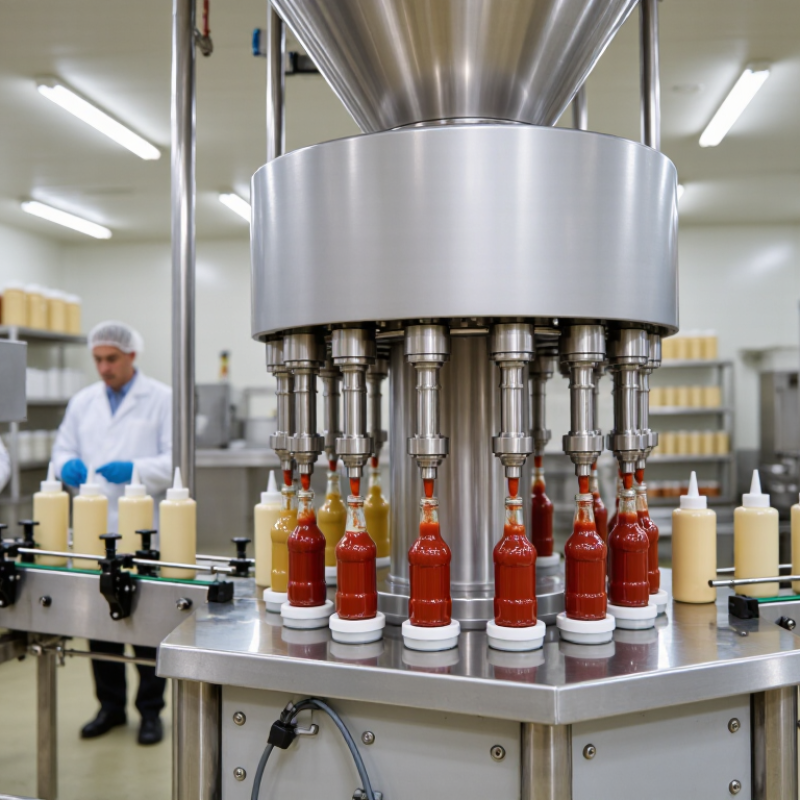
A sauce filling machine transfers a measured quantity of sauce from a hopper into bottles, jars, pouches, or other containers. Its main parts include a product tank, pump, filling nozzle, control system, and sensors. The machine controls each stage. It opens the filling valve, measures the portion, stops the flow, and moves the container forward.
The working method depends on the sauce. Piston fillers handle thick products, such as barbecue sauce or chili paste, with strong portion control. Pump fillers suit thinner sauces and continuous production. Peristaltic systems can reduce product contact with internal parts, which may simplify cleaning. During a practical trial, check how the machine handles cold sauce, air bubbles, and small particles. These details often cause more trouble than the advertised speed.
Choose equipment according to viscosity, particle size, container shape, target volume, and daily output. Stainless steel contact parts support hygiene and long service life. Tool-free nozzle removal can save valuable cleaning time. Ask for accuracy tests at your real production temperature. A specification sheet may promise excellent precision, but laboratory conditions can hide dripping or uneven filling. That is worth questioning. Operators should also inspect the control panel, emergency functions, changeover process, and spare-part access. A machine that runs quickly but takes hours to clean may become expensive in practice. Test it carefully.
Which Sauce Properties Matter When Choosing a Filling Machine?
How to Choose the Best Sauce Filling Machine in 2026?
When choosing a sauce filling machine, study the sauce before studying the equipment. A sauce’s behavior controls filling accuracy, speed, and cleaning requirements. Thin sauces usually flow quickly through smaller nozzles. Dense sauces need stronger pumps and wider product paths. Measure viscosity at the actual filling temperature. Do not rely on room-temperature tests alone. Heating can improve flow, but it may also change texture, color, or flavor. A stable process matters more than an impressive machine specification.
Particles require careful attention. Chopped vegetables, herbs, seeds, or fruit pieces can block narrow valves. Measure their size and check whether they settle during production. Foamy sauces need gentle product movement and controlled filling speeds. Otherwise, containers may appear full but hold less sauce than expected. Sticky sauces may require heated hoppers, shorter nozzles, or anti-drip control. Small details matter.
In practical testing, use the real sauce, container, and production temperature. Run repeated fills, then compare container weights and visible levels. Also observe dripping after nozzle shutoff. A clean test room can hide factory problems. I have seen accurate trials fail when the sauce cooled inside long product lines. This is where judgment can be imperfect. Ask operators to review cleaning time, changeovers, and daily handling. A machine that fills well but causes difficult cleaning may become an expensive compromise. Reliable selection comes from testing actual behavior, not guessing from viscosity numbers alone.
How to Choose the Best Sauce Filling Machine in 2026?
Which sauce properties matter when choosing a filling machine?
Viscosity is one of the most important factors in sauce filling. The indicative ranges below represent common values measured at approximately 20–25°C and can vary with recipe, temperature, shear rate, and solids content. Thin sauces generally suit gravity or overflow filling, while high-viscosity sauces usually require piston, servo-piston, or positive-displacement filling systems. Sauces containing particles also require a suitable nozzle diameter and gentle product handling.
What Types of Sauce Filling Machines Are Available?
How to Choose the Best Sauce Filling Machine in 2026?
Sauce filling machines come in several practical types, and each suits a different product. Piston fillers handle thick sauces, pastes, and products containing small particles. They deliver accurate volumes through controlled piston movement. Pump fillers work well with thin or medium sauces and support continuous production. Gear, lobe, and peristaltic pumps offer different levels of pressure and product care.
Gravity fillers are suitable for free-flowing sauces with consistent viscosity. They use tank height to guide the filling process. Overflow fillers create an even liquid level across containers, which improves shelf appearance. Net weight fillers measure each container by weight, helping control costly ingredients. Servo-driven systems provide flexible speed and volume adjustments. However, higher precision often brings greater cost and maintenance needs. There is no perfect machine.
Tips: Test your sauce at its real processing temperature. Viscosity can change dramatically after heating or cooling. Check nozzle size, cleaning access, filling speed, and container shape. Ask for a product trial with your actual recipe. Watch for splashing, dripping, or air pockets. These small problems often appear only during testing. I once underestimated sauce foam, and the filling accuracy suffered. A slower setting worked better. Consider future recipes, but do not pay for features you will never use. A clear production record also helps compare machine performance over time.
How Do Capacity, Accuracy, and Hygiene Affect Machine Selection?
How to Choose the Best Sauce Filling Machine in 2026?
How Do Capacity, Accuracy, and Hygiene Affect Machine Selection?
Capacity should match real demand, not an optimistic sales forecast. A machine running too slowly creates queues, while excessive speed can increase foam, splashing, and product waste. PMMI’s 2024 State of the Industry report identifies labor shortages and automation needs as continuing packaging challenges. Therefore, calculate containers per minute, changeover time, and daily sanitation hours. The fastest machine may not deliver the highest output.
Accuracy protects both margins and customer trust. A small overfill across thousands of bottles becomes expensive. Check the machine’s tested tolerance with your actual sauce, including particles, viscosity, and temperature. Ask for trial results, not only catalog figures. This is where selection can become imperfect. Laboratory performance may change on a busy production floor.
Tips: Request a factory test using your sauce. Measure average fill weight, variation, cleaning time, and restart losses. Compare the results with your acceptable limits.
Hygiene deserves equal attention. The World Health Organization estimates that contaminated food causes about 600 million illnesses annually worldwide. Choose smooth, accessible product-contact surfaces, hygienic seals, and tool-free dismantling where practical. The Codex General Principles of Food Hygiene also emphasizes cleaning, maintenance, and contamination control. Avoid hidden corners around valves and hoses. They often become tomorrow’s inspection problem. A documented sanitation procedure is essential, but operators still need training and time.
How to Choose the Best Sauce Filling Machine in 2026? - How Do Capacity, Accuracy, and Hygiene Affect Machine Selection?
A practical comparison of common sauce-filling machine configurations based on typical operating ranges and application requirements.
| Machine Configuration | Typical Product Viscosity | Typical Filling Capacity | Typical Output Range | Typical Fill Accuracy | Hygiene and Cleaning Characteristics | Best Application Fit | Key Selection Limitation |
|---|---|---|---|---|---|---|---|
| Piston Filler | Low to high viscosity; suitable for sauces, dressings, pastes, and products with particulates when the valve is correctly selected. | Approximately 10 mL to 5,000 mL per fill, depending on cylinder size and machine configuration. | Approximately 10 to 60 fills per minute for many single- to multi-nozzle systems. | Typically ±0.5% to ±1.0% under stable product and operating conditions. | Strong hygienic performance when fitted with sanitary product-contact parts, tool-free components, drainable piping, and clean-in-place capability. | Thick sauces, tomato products, mayonnaise-type sauces, marinades, and products requiring accurate portion control. | Pulsating product flow can limit very high-speed operation; abrasive particles may increase seal and valve wear. |
| Peristaltic Pump Filler | Low to medium viscosity liquids and selected particulate products; best when gentle handling is required. | Approximately 1 mL to 2,000 mL per fill, depending on tubing and pump design. | Approximately 10 to 80 fills per minute, depending on fill volume, tubing size, and product properties. | Typically ±0.5% to ±1.5%; performance depends strongly on tubing condition and calibration. | Very strong product isolation because the product contacts only the disposable or replaceable tube. This can reduce cross-contamination risk. | Low- to medium-viscosity sauces, liquid dressings, allergen-sensitive products, and small-batch or frequent-changeover production. | Tubing fatigue, temperature, and repeated flexing can affect accuracy; thick sauces may reduce speed and increase pump load. |
| Gear Pump Filler | Low to high viscosity products with relatively consistent texture and limited large particulates. | Approximately 5 mL to 5,000 mL per fill, depending on pump size and control system. | Approximately 20 to 150 fills per minute in multi-nozzle arrangements. | Typically ±0.5% to ±1.0% when flow, temperature, and pump speed are controlled. | Requires hygienic pump design, effective draining, suitable seals, and validated cleaning procedures. Internal clearances can retain product if the pump is not designed for sanitary service. | Continuous production of smooth sauces, syrups, emulsions, and products requiring steady metered flow. | Large particles or fibrous ingredients can damage the pump or cause blockage; shear may affect sensitive emulsions. |
| Lobe Pump Filler | Medium to high viscosity products, including products containing soft particulates or delicate ingredients. | Approximately 50 mL to 10,000 mL per fill, depending on pump and nozzle configuration. | Approximately 10 to 80 fills per minute, depending on product and package size. | Typically ±0.5% to ±1.5% with stable pressure, temperature, and pump-speed control. | Suitable for sanitary processing when constructed with polished product-contact surfaces, hygienic seals, drainable layouts, and validated CIP procedures. | Chunky sauces, salsa, fruit preparations, products with fragile particulates, and applications where low shear is important. | Usually more expensive and mechanically complex than basic piston or peristaltic systems; output may be lower for very small fills. |
| Overflow Filler | Low to medium viscosity, free-flowing sauces and liquids with consistent foaming behavior. | Approximately 50 mL to 5,000 mL per fill, depending on nozzle and container design. | Approximately 20 to 120 fills per minute, depending on the number of nozzles and package format. | Typically volume consistency is good, but weight accuracy can vary with density, temperature, and foam. | Easy to inspect and clean when the product path is short and the nozzles are removable. Foaming control and drip management are important hygiene considerations. | Thin sauces and liquids where a consistent visual fill level is more important than exact product weight. | Not ideal for thick, particulate, or highly shear-sensitive products; fill performance can change with foaming. |
| Auger Filler | Very thick, semi-solid, or powdered products; generally not the first choice for free-flowing liquid sauces. | Approximately 10 g to 5,000 g per fill, depending on auger diameter and hopper design. | Approximately 10 to 60 fills per minute, depending on fill weight and product flowability. | Typically ±1.0% to ±2.0%; accuracy depends on bulk density, product consistency, and anti-bridging control. | Requires careful hopper, auger, and seal design to prevent product buildup. Disassembly and cleaning may take longer than with a short liquid product path. | Very thick sauce concentrates, dry seasoning blends, powdered soup bases, and products that do not pump reliably. | Generally unsuitable for thin sauces and products with unstable density or large wet particulates. |
What Should You Check Before Buying a Sauce Filling Machine in 2026?
Before buying a sauce filling machine in 2026, test it with your actual product. A thin chili sauce flows differently from a thick, seed-filled dressing. Ask the supplier to run a sample batch using your sauce, container, and target fill volume. Watch for drips, trapped air, uneven fills, and residue around the nozzle. Small details matter.
Check the machine’s filling range, accuracy, and adjustment process. Can operators change from a 250-milliliter bottle to a 500-milliliter jar without lengthy recalibration? For viscous sauces, confirm that the pump and product-contact parts suit the recipe. Request details about cleaning access, seals, and parts replacement. Cleaning should be practical, not merely promised.
Match output speed to your real production plan, not an optimistic sales estimate. Ask how performance changes with thicker products or frequent container changes. Review installation, operator training, spare-part availability, and maintenance support. Get these terms in writing. A fast machine that sits idle is no bargain. I would also leave room in the budget for unexpected adjustments; those costs are easy to underestimate. Test before committing.
FAQS
Match capacity with actual demand, not optimistic forecasts. Measure containers per minute, changeover time, and daily sanitation hours. The fastest machine may still create more waste.
Excessive speed may cause foam, splashing, drips, and product loss. A slower setting can sometimes produce better usable output. It feels backward.
Small overfills become expensive across thousands of containers. Test average fill weight and variation with the actual sauce. Catalog figures are not enough.
Use the real sauce, container, and target fill volume. Check drips, trapped air, uneven fills, residue, and restart losses. Test it.
Thin sauces flow differently from thick, seed-filled mixtures. Confirm that the pump and contact parts suit the recipe. Temperature can also change flow behavior.
Look for smooth contact surfaces, hygienic seals, and accessible cleaning areas. Avoid hidden corners near valves and hoses. Those areas often cause inspection problems later.
A documented sanitation procedure is essential. Operators need enough time and training to follow it properly. Cleaning should be practical, not merely promised.
Request written details about installation, training, replacement parts, and maintenance support. Leave budget space for unexpected adjustments. Costs are easy to underestimate.
Conclusion
Choosing the right Sauce Filling Machine in 2026 requires more than comparing prices or production speed. These machines are designed to measure and dispense sauces into containers with consistent volume, using systems such as piston, pump, or gravity filling. The best choice depends on the sauce’s viscosity, temperature, particle size, foaming tendency, and flow behavior. A smooth dressing may require different equipment from a thick sauce containing herbs or small food pieces.
Capacity, filling accuracy, and hygiene are also essential considerations. Buyers should evaluate the required output, container sizes, adjustment flexibility, cleaning procedures, and the machine’s compatibility with food-safe materials. Easy disassembly, reliable sealing, and sanitary design can reduce contamination risks and maintenance time. Before purchasing, confirm the machine’s performance with the actual sauce, check its operating range, consider future production growth, and review technical support, spare parts availability, safety features, and overall energy efficiency. A careful assessment helps ensure dependable operation, consistent product quality, and long-term value.
Blog Tags: