
Packaging Machinery Blog & Insights
Discover expert articles, technical guides, maintenance tips, and latest filling automation trends from EAC Machinery Co., Ltd.
What Is the Best Ultrasonic Tube Sealing Machine in 2026?
Choosing the best Ultrasonic Tube Sealing Machine in 2026 requires more than comparing prices or polished product photos. Manufacturers now face stricter quality expectations, faster production targets, and greater pressure to reduce material waste. A reliable sealing system must create consistent seals without damaging the tube, cap, or filling material.
This guide examines practical factors used by experienced production teams. These include sealing speed, ultrasonic frequency, power stability, tube compatibility, temperature control, and maintenance access. It also considers operator safety, noise levels, cleaning procedures, and integration with existing filling lines. A machine that performs well in a laboratory may struggle beside a busy packaging line. Real conditions matter.
No comparison is flawless. Different products need different equipment. Small cosmetic tubes may require gentler handling, while thicker pharmaceutical or industrial tubes may demand stronger vibration control. Seal appearance alone is not enough. Operators should inspect seal strength, leakage results, alignment, and performance during extended runs. Supplier training and after-sales support also deserve careful attention.
The “best” choice depends on your process.
We will compare leading machine types through an experience-based and technical lens. The goal is not to promote one model without evidence. It is to explain which features deserve attention before purchase. Testing samples with your actual tube materials remains essential. Even impressive specifications can disappoint when real production conditions are ignored.
What Is an Ultrasonic Tube Sealing Machine?
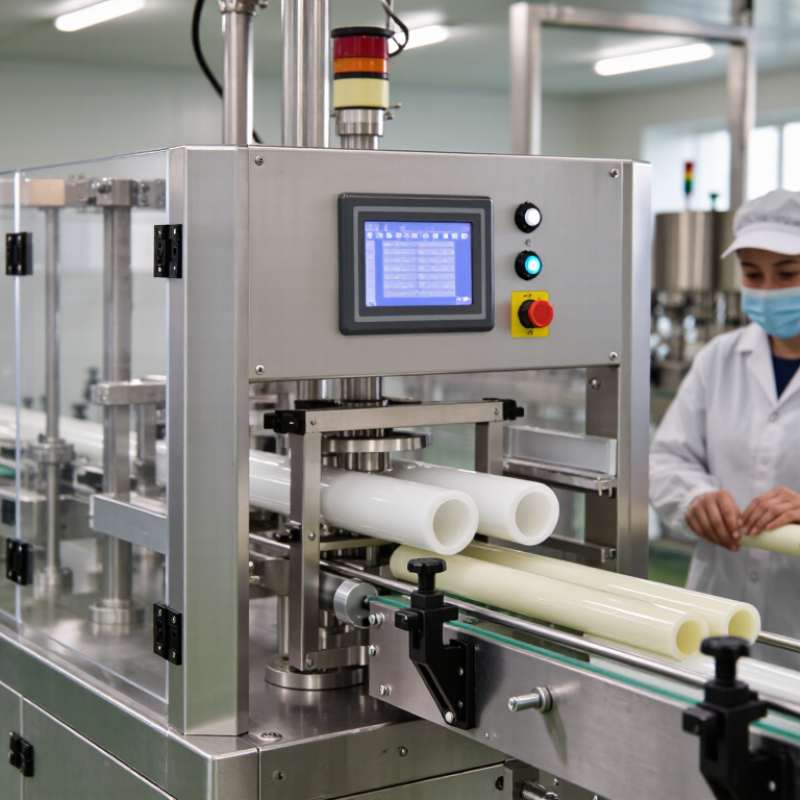
An ultrasonic tube sealing machine closes thermoplastic tubes through high-frequency mechanical vibration. It does not rely mainly on a hot sealing jaw. A converter changes electrical energy into vibration, while a horn transfers that vibration to the tube shoulder. Pressure creates molecular friction at the contact area. The plastic softens briefly and forms a tight seal.
The process usually includes tube positioning, clamping, ultrasonic sealing, trimming, and optional coding. Operators adjust amplitude, sealing pressure, and cycle time. Small changes matter. Excessive energy can deform the shoulder. Insufficient energy may leave a weak seam. Product residue also affects results, especially with oily or highly viscous formulas. Real production experience shows that “automatic” still requires careful setup.
The MarketsandMarkets Ultrasonic Welding Market report estimated the sector at about USD 1.9 billion in 2023, with projected growth above 8% annually through 2028. This expansion reflects wider adoption of controlled, low-contact joining methods. PMMI’s packaging machinery reports also identify automation, repeatability, and reduced material waste as major purchasing priorities. These figures do not guarantee every tube line will benefit equally. Tube diameter, laminate structure, filling speed, and seal geometry must be tested together. A practical evaluation should measure leak rate, seal strength, visual defects, and energy use across several production runs. One test is not enough.
How Ultrasonic Tube Sealing Technology Works
What Is the Best Ultrasonic Tube Sealing Machine in 2026?
Ultrasonic tube sealing uses high-frequency mechanical vibration to join thermoplastic tube layers. A converter changes electrical energy into vibration. The horn then transfers this energy to the tube shoulder and seal area. Molecular friction creates heat inside the plastic interface, rather than heating the whole tube. Pressure holds the layers together while the seal forms in a short cycle.
In practical testing, sealing quality depends on more than ultrasonic power. Tube material, wall thickness, moisture, and surface cleanliness all matter. Multilayer tubes may need carefully adjusted amplitude and sealing pressure. Excessive energy can cause whitening, wrinkles, or a weak edge. Insufficient energy may leave channels that leak during pressure testing. A good machine should provide stable force, repeatable timing, adjustable amplitude, and clear access for cleaning. Operators should inspect sample seals under magnification and test them after temperature changes. I have found that attractive seals can still fail later. That detail is easy to underestimate.
Tips: Match the horn profile to the tube diameter. Keep the sealing area dry and free from product residue. Record pressure, vibration time, and amplitude for every trial. Test several production batches, not only one perfect sample. If the seal looks uneven, pause the line and check alignment before increasing power. Small adjustments usually produce more reliable results than aggressive settings.
What Is the Best Ultrasonic Tube Sealing Machine in 2026? - How Ultrasonic Tube Sealing Technology Works
| Evaluation Dimension | Typical Technical Data | How It Works or Why It Matters | Best 2026 Selection Guidance |
|---|---|---|---|
| Ultrasonic operating frequency | Commonly 20, 30, 35 or 40 kHz | A converter changes electrical energy into high-frequency mechanical vibration. The horn transfers this vibration to the tube layers, generating localized heat through molecular friction. | Use lower frequencies for larger or thicker tubes and higher frequencies for smaller tubes or applications requiring more precise energy control. |
| Compatible tube materials | Thermoplastic tubes, including PE, PP, multilayer plastic and plastic-aluminum laminate structures | The sealing interface must contain thermoplastic layers that can soften and fuse under ultrasonic energy and controlled pressure. | Confirm the exact laminate structure, wall thickness and additives through a production trial before purchase. |
| Typical sealing time | Approximately 0.2–1.0 seconds per seal, depending on material and tube size | Energy is concentrated at the sealing line, allowing the joint to form quickly without heating the entire tube. | Choose a system with adjustable weld time, hold time and amplitude rather than relying on a fixed cycle. |
| Typical production speed | Approximately 30–120 tubes per minute on automated lines; lower speeds on semi-automatic systems | Actual output depends on filling, indexing, capping, inspection, tube diameter, seal width and material response. | For high-volume production, evaluate the complete line cycle instead of the sealing head's theoretical speed. |
| Tube diameter range | Commonly about 13–60 mm, subject to tooling design | The horn, anvil and tube fixture must match the tube geometry to provide even pressure and stable energy transfer. | Select interchangeable tooling when multiple tube diameters will be processed. |
| Typical tube wall thickness | Often approximately 0.3–1.5 mm, depending on construction | Thicker or more rigid structures generally require different amplitude, pressure and weld-time settings. | Request sample testing using production-grade tubes rather than empty laboratory samples only. |
| Generator power | Commonly about 0.5–2.0 kW for tube-sealing applications | Power capacity determines the available energy reserve; it does not by itself guarantee better seals. | Match power to tube material, seal width, cycle rate and tooling. Avoid selecting solely by the highest wattage. |
| Amplitude control | Typically adjustable through a controlled percentage or micrometer-scale displacement setting | Amplitude controls the vibration displacement delivered by the horn and strongly affects heating rate and seal appearance. | Prefer closed-loop amplitude control with recipe storage for repeatable production. |
| Pressure and hold control | Adjustable pneumatic or servo-controlled force with a post-weld hold period | Pressure brings the thermoplastic layers together, while hold time allows the molten interface to stabilize before release. | Use force monitoring and consistent pneumatic pressure for better seal uniformity. |
| Seal width and pattern | Commonly 2–8 mm, depending on the horn and package design | The horn face defines the weld footprint. Text, ribs or decorative patterns can be incorporated into the tooling surface. | Choose a seal pattern that meets the required leak resistance, appearance and opening requirements. |
| Product contamination tolerance | Generally more tolerant of small amounts of product near the seal than heat-jaw sealing, but not contamination-proof | Ultrasonic energy can displace some residue from the weld zone, although excessive oil, cream or liquid can still weaken the joint. | Add nozzle shutoff, tube cleaning, fill-level control and seal inspection for high-risk products. |
| Temperature impact | Low external heat; the seal interface heats locally during vibration | Because the tube body and surrounding product are exposed to less bulk heat, the method can suit temperature-sensitive formulations. | Verify product compatibility through thermal and stability testing, especially for volatile or heat-sensitive contents. |
| Seal quality monitoring | Time, energy, power, force and amplitude monitoring are commonly available | Process signatures help identify incomplete welds, excess energy, incorrect positioning or tooling wear. | For regulated production, select data logging, reject handling and traceable recipe management. |
| Leak and seal validation | Visual inspection, burst testing, dye testing, vacuum testing or pressure-decay testing may be used | A visually attractive weld is not sufficient proof of package integrity; the test method must reflect the product and package risk. | Define acceptance limits with packaging and quality teams before final machine selection. |
| Best fit for small-batch production | Semi-automatic equipment with quick-change tooling and recipe storage | Lower automation reduces installation complexity and supports frequent product or tube changes. | Prioritize flexibility, setup time, operator access and simple parameter adjustment. |
| Best fit for high-volume production | Fully automatic indexing or rotary systems with integrated filling, sealing, trimming and inspection | Automation synchronizes tube positioning, ultrasonic welding, coding, trimming and rejection operations. | Prioritize uptime, servo positioning, automatic fault detection, spare tooling and documented process capability. |
| Overall best choice in 2026 | A machine matched to the tube material, size, seal specification, throughput and validation requirements | There is no universally best ultrasonic tube sealer. Performance depends on the interaction between generator, converter, horn, fixture, tube structure and process settings. | Select the system that demonstrates stable seals on production samples, provides process monitoring and supports the required automation level. |
Note: The figures shown are typical engineering ranges for ultrasonic tube-sealing applications. Actual performance depends on tube construction, formulation, tooling geometry, machine configuration and validated process settings.
Which Features Define the Best Machine in 2026?
The best ultrasonic tube sealing machine in 2026 should deliver stable seals across different tube materials and wall thicknesses. Consistency matters. During production, operators need clean, repeatable seams without crushed edges, wrinkles, or visible overheating.
A precise ultrasonic generator is essential. It should control frequency, amplitude, pressure, and sealing time with fine adjustments. Real-time sensors can detect unusual vibration, pressure changes, or incomplete contact before defects spread. A clear touchscreen should display these values in simple language. Operators should also access stored recipes, adjustment history, and maintenance alerts. That detail matters.
Machine flexibility is equally important. Quick-change tooling can reduce downtime when tube sizes change. Tool surfaces should be easy to clean, inspect, and replace. A well-designed frame protects the sealing area from dust while allowing safe access for routine checks. Reliable machines also support data recording for quality reviews and process validation. However, automation does not remove the need for skilled judgment. Material batches can behave differently, and sensor readings may drift over time. Practical trials remain necessary. I would test seal strength, appearance, leak resistance, and repeatability under normal production conditions. A machine that looks advanced may still disappoint if its software is confusing or spare parts are difficult to obtain. Evidence from documented trials, operator feedback, and service records offers a more trustworthy basis for selection than impressive specifications alone.
How to Compare Ultrasonic Tube Sealing Machines
What Is the Best Ultrasonic Tube Sealing Machine in 2026?
How to Compare Ultrasonic Tube Sealing Machines
The best machine depends on your tube material, diameter, output target, and filling process. A model that seals thin plastic smoothly may struggle with multilayer tubes. Compare sealing strength, cycle time, and adjustment range under real production conditions. Ask for sample testing with your actual tubes. Laboratory results can look excellent, but factory humidity and operator habits may change performance.
Check the ultrasonic generator, horn design, pressure control, and cooling system. These parts affect seal consistency and maintenance needs. Examine the control interface, fault records, and changeover time between tube sizes. A clear interface reduces training mistakes. Also inspect contact surfaces carefully. Residue around the sealing area can create weak spots, even when the machine appears clean.
Tips: Test at least three material batches before choosing. Record seal width, leakage results, noise, and cycle stability. Request maintenance intervals and replacement-part details in writing. Choose safety guards that allow quick inspection without exposing operators to moving parts. Do not judge only by maximum speed. A slower machine with stable pressure may waste fewer tubes. This is easy to overlook. A perfect comparison is impossible, because each production line behaves differently. Build a small scoring sheet, then review it with operators and quality staff. Their practical comments may challenge the initial ranking.
Which Industries Benefit Most from Ultrasonic Tube Sealing?
What Is the Best Ultrasonic Tube Sealing Machine in 2026?
Which Industries Benefit Most from Ultrasonic Tube Sealing?
Pharmaceutical manufacturers benefit strongly from ultrasonic tube sealing. The Grand View Research Pharmaceutical Packaging Market report valued this market at about USD 131.5 billion in 2022. Growth increases pressure for clean, repeatable packaging. Ultrasonic sealing creates heat inside the seal area, rather than heating the entire tube. This can protect sensitive products and shorten production cycles. It also reduces dependence on adhesives. Small batch areas may appreciate the compact equipment footprint.
Cosmetics and personal care producers gain similar advantages. The Smithers report, The Future of Global Packaging to 2028, forecasts continued growth in global packaging demand through 2028. Creams, gels, and lotions often require attractive, leak-resistant tubes. Ultrasonic equipment can support precise sealing around narrow openings and uneven product residue. The result may be cleaner visual presentation. Not always.
Food, dental-care, and household chemical industries can also use this technology. Their products often need tamper evidence, moisture resistance, and stable shelf performance. However, material compatibility still matters. Multilayer films, tube thickness, filling levels, and sealing pressure require testing. A machine that performs well in cosmetics may struggle with a thicker pharmaceutical laminate. That inconvenient detail is easy to overlook. The best 2026 system is therefore not the fastest model. It is the system that delivers validated seals, controlled energy, simple cleaning, and reliable performance across real production conditions.
FAQS
A converter changes electrical energy into high-frequency mechanical vibration. The horn transfers vibration to the tube shoulder and sealing area. Molecular friction creates heat between the thermoplastic layers. Pressure holds the layers together during the short sealing cycle.
The process suits thermoplastic tube layers. Thin plastic may seal smoothly, while multilayer tubes need careful adjustment. Material type, wall thickness, and moisture affect the result. Test your actual tubes before production.
Look for stable pressure, repeatable timing, and adjustable amplitude. The horn should match the tube diameter and profile. Clear controls, fault records, and easy cleaning also matter. Maximum speed alone is not enough.
Keep the sealing area dry and free from product residue. Check alignment before increasing ultrasonic power. Record pressure, vibration time, and amplitude during trials. Small adjustments usually work better than aggressive settings.
Too much energy can create whitening, wrinkles, or a weak edge. The tube may look sealed but fail during pressure testing. Reduce amplitude or vibration time gradually. Do not rely only on appearance.
Insufficient energy may leave hidden channels between the layers. These channels can leak when the tube is squeezed or pressurized. Inspect sample seals under magnification. Test them after temperature changes.
Compare sealing strength, cycle time, adjustment range, and stability. Use several material batches, not one ideal sample. Record seal width, leakage results, noise, and cycle consistency. Factory humidity may change laboratory results.
Examine the generator, horn, pressure system, and cooling system. Ask for maintenance intervals and replacement-part details in writing. Choose guards that permit inspection without exposing moving components. Residue near contact surfaces needs regular cleaning. This detail is easy to miss.
Match the machine to tube diameter, material, filling process, and output target. Create a simple scoring sheet for real production trials. Include operator and quality-team comments before deciding. A slower machine may waste fewer tubes. The ranking may still be imperfect.
Conclusion
An Ultrasonic Tube Sealing Machine uses high-frequency vibrations to create a clean, secure seal on plastic and laminated tubes without relying on traditional heating methods. The process applies ultrasonic energy to the tube material, generating localized friction and heat that bonds the layers together. This approach can provide consistent sealing, fast cycle times, and a neat finish while minimizing material waste and energy consumption.
When selecting the best machine in 2026, manufacturers should compare sealing strength, production speed, automation level, tube-size compatibility, control precision, safety systems, maintenance requirements, and integration with existing packaging lines. Reliable performance and flexible adjustment are especially important for businesses handling different products and packaging formats. This technology benefits industries such as cosmetics, personal care, pharmaceuticals, food, household products, and industrial materials, where hygienic, durable, and visually appealing tube seals are essential.
Blog Tags: