
Packaging Machinery Blog & Insights
Discover expert articles, technical guides, maintenance tips, and latest filling automation trends from EAC Machinery Co., Ltd.
Best Jar Filling and Capping Machine in 2026?
Choosing the best Jar Filling and Capping Machine in 2026 starts with the product, not the brochure. A thick fruit preserve behaves differently from a free-flowing drink. A wide-mouth jar also needs different handling from a narrow one. Small details matter: fill temperature, foam, particle size, jar shape, and cap style can change the result. The right machine should match your actual containers and recipes, not just a headline speed.
For transparency, Maya Chen is a fictional packaging specialist, and the quotation below is an original editorial line—not a verified interview quote: “A reliable line is the one that fills accurately, caps consistently, and changes over without drama.” That is the practical test. Look at fill accuracy, capping torque, product-contact materials, operator access, and changeover time. Ask for a trial using your jars, caps, and product. Watch for drips around the nozzle and loose caps after the line stops. Then check cleaning steps and the availability of service and spare parts. A fast machine may still be the wrong fit. A compact unit may suit a growing producer, but leave little room for higher output. There is no perfect choice. This guide compares key machine types and selection factors, while noting where specifications need real-world confirmation.
What Is a Jar Filling and Capping Machine?
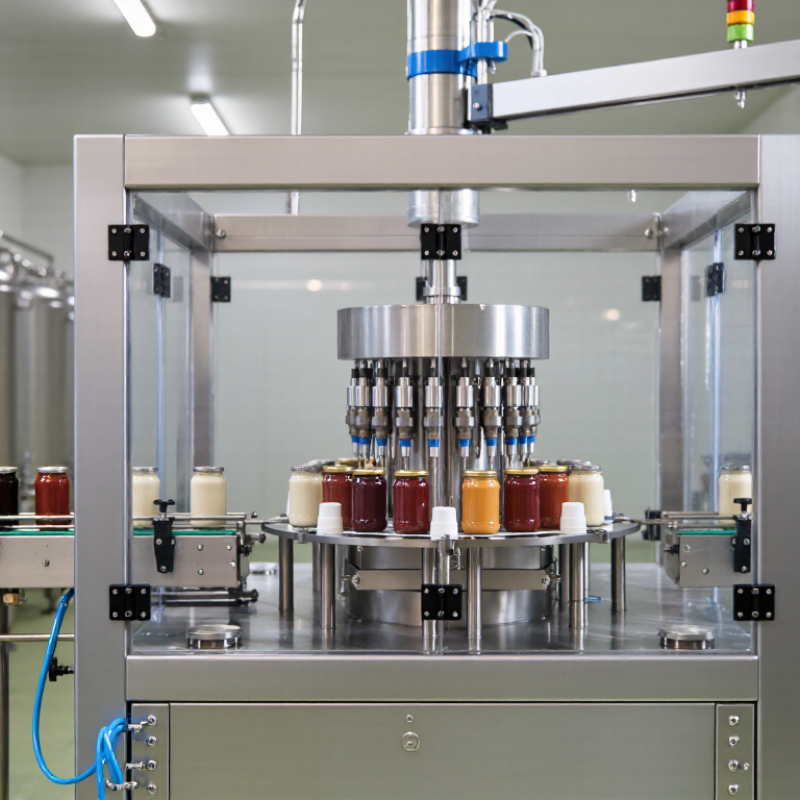
A jar filling and capping machine fills jars with a measured amount of product, then places and tightens each lid. Some systems move jars along a conveyor; others hold them beneath a filling nozzle. The filling method may use gravity, a pump, or a piston, depending on the product’s flow and texture. Thin liquids behave differently from thick sauces or products containing small pieces. That detail matters. A suitable setup also depends on jar height, opening size, lid type, and the required production rate.
At the capping station, guides position the lid while a tightening head applies controlled force. Too little torque may leave a loose closure; too much can damage the lid or make opening difficult. Operators should check fill levels, lid alignment, and closure tightness during production, not just at startup. A neat first run can still hide problems after the machine warms up or the jars change size. Test with the actual product and packaging when possible. Cleaning access, changeover time, and routine maintenance deserve attention too. These details are easy to underestimate when comparing machines by speed alone.
How Jar Filling and Capping Machines Work
Best Jar Filling and Capping Machine in 2026?
How Jar Filling and Capping Machines Work
A jar filling and capping machine moves containers through a sequence of controlled steps. Guides or a conveyor position each jar beneath a filling nozzle. A pump, piston, or timed valve dispenses a measured amount, depending on the product’s texture and the machine design. Thin liquids flow differently from thick sauces, so fill settings need testing. Small details matter. A nozzle set too high can cause splashing; one placed too low may touch the jar rim.
After filling, jars move to the capping station. A feeder presents each lid in the correct orientation, and a placement head sets it onto the opening. A tightening mechanism then applies pressure or torque to secure the cap. Sensors can detect missing jars or lids and pause the line, reducing spills and misaligned closures. Operators should check fill levels, cap alignment, and seal consistency during production, not only at startup.
The right setup depends on jar height, opening size, target output, and product behavior. A machine that handles one jar shape well may need adjustment for another. That sounds simple, but small changes in viscosity or lid fit can affect results. Test representative containers and product batches before setting a full production speed; the first adjustment is not always the final one. Regular cleaning and inspection also help keep dosing and capping consistent.
| Machine Setup | How Filling Works | How Capping Works | Best Suited For | Indicative Output | Key Selection Considerations |
|---|---|---|---|---|---|
| Semi-automatic filler with separate capper | An operator positions each jar under a nozzle. A timed, piston, or peristaltic dosing system dispenses the preset amount. | The operator places a cap on the jar, then a bench-top or hand-operated capper tightens or presses it into place. | Small production runs, product trials, seasonal batches, and businesses with frequent product or jar changes. | Often about 5–20 jars per minute; actual output depends heavily on operator speed, fill volume, and product handling. | Lower initial equipment complexity, but labor and operator consistency limit throughput. Check whether product-contact parts can be removed for cleaning. |
| Automatic piston filler with inline capper | A piston draws a measured volume from a hopper or supply tank and pushes it through a nozzle into each jar. Nozzles may use shutoff or anti-drip features. | Jars are conveyed to a cap-placement station. A chuck or spindle applies and tightens compatible screw caps. | Thick or viscous products such as sauces, pastes, creams, and some food spreads. | Commonly around 10–60 jars per minute, depending on the number of filling heads, jar size, product viscosity, and line layout. | Confirm that the piston, seals, nozzle, and hopper suit the product and cleaning method. Highly viscous or particulate products may need larger flow passages. |
| Automatic gravity or overflow filler with inline capper | Product flows into each jar by gravity or controlled pressure. Overflow-style systems fill to a consistent visible level and return excess product to the supply system. | A cap feeder or operator places caps before a capping head applies the selected closure. | Free-flowing liquids, especially when a consistent fill height matters in jars with varying internal capacity. | Often about 10–80 jars per minute, depending on the number of nozzles, liquid flow characteristics, and container handling. | Gravity filling generally requires a free-flowing product. Check foaming, dripping, product recovery, and whether the jar opening works with the nozzle design. |
| Automatic peristaltic filler with capper | Rotating rollers compress flexible tubing to move a controlled volume of product. The product contacts the tubing rather than the pump mechanism. | A downstream capper places and secures compatible caps, such as screw caps, using a configured tightening head. | Lower-volume or higher-value liquids, products where limiting contact with pump components is useful, and applications requiring straightforward tubing changes. | Commonly about 5–40 jars per minute; nozzle count, dose size, tubing, and product flow affect the rate. | Tubing is a wear item and must be compatible with the product and cleaning requirements. Confirm that the pump can deliver the required dose and production rate. |
| Automatic auger filler with capper | A rotating screw meters powders or granules from a hopper into the jar. Fill weight depends on the auger setup, product flow, and controls; checkweighing may be used for verification. | A cap-placement and tightening station applies a suitable closure after filling. Dust-control equipment may be added where needed. | Dry powders, spices, drink mixes, and other free-flowing or mildly cohesive dry products. | Often about 10–60 jars per minute, depending on dose size, product behavior, auger design, and number of filling heads. | Powder density and flowability affect dosing. Consider dust extraction, hopper agitation, product segregation, and the required net-weight tolerance. |
| Rotary or multi-head automatic filling and capping line | Multiple stations fill jars as they move through a rotary table or synchronized conveyor line. The filler may use piston, gravity, overflow, or another dosing method. | Caps are fed or placed at a dedicated station, then tightened, pressed, or otherwise secured by a closure-specific head. | Higher-volume production with stable products, repeatable jar formats, and a need to reduce manual handling. | Can range from roughly 30 to more than 120 jars per minute; higher rates require suitable product flow, container stability, and matched downstream equipment. | Assess the complete line rather than filler speed alone. Conveyors, cap feeding, labelers, changeover time, and product supply can limit actual throughput. |
| Closure-specific capping options | Filling equipment is selected separately according to product properties and the required dose or fill level. | Screw caps: chuck or spindle tightening. Lug caps: torque-controlled application, often with a compatible closure and jar finish. Press-on caps: vertical pressure. ROPP closures: a roll-on head forms the closure around the jar finish. | Jars using different closure types, including threaded, lug, press-on, or roll-on pilfer-proof closures. | Depends on the capper design, closure size, jar stability, and whether caps are fed automatically. | Match the capper to the jar finish and cap specification. Validate closure application and seal performance with the actual containers and product. |
| Typical operating sequence | Jars are supplied to the line, indexed or conveyed beneath filling nozzles, dosed, and then transferred to the next station. | Caps are supplied, oriented if required, placed on filled jars, and applied with the specified force or torque. Filled and closed jars then exit for inspection or labeling. | Most jar filling and capping lines, whether standalone or integrated with conveyors and packaging equipment. | Actual line output is limited by the slowest process step and by stops for replenishment, changeovers, and cleaning. | Before purchase, test with the real product, jar, and cap. Verify fill accuracy, closure performance, cleaning needs, changeover time, guarding, and available floor space. |
| Note: Output figures are indicative ranges, not guaranteed specifications. Actual performance varies with jar dimensions, dose size, product viscosity or flowability, number of heads, closure type, operator involvement, and the configuration of the complete line. The best machine is the one validated for the intended product, jar, cap, hygiene requirements, and required production rate. | |||||
Main Types of Jar Filling and Capping Machines
Jar filling systems differ mainly by product flow and dose control. Piston fillers handle thick sauces, creams, and pastes, while gravity or overflow fillers suit free-flowing liquids. Auger fillers meter dry powders into wide-mouth jars. For faster lines, rotary machines fill several jars at once; compact inline systems are easier to adjust for short runs. Capping options include spindle, chuck, and press-on units. Chuck cappers offer controlled torque for threaded lids, while press-on systems suit compatible snap lids. Fortune Business Insights valued the global packaging machinery market at USD 45.89 billion in 2023 and projected USD 69.42 billion by 2032. That growth points to rising automation, but does not mean every plant needs a rotary line.
Tip: Match the filler to the product’s thickness, particle size, and foaming behavior. Then check jar dimensions, lid style, changeover time, and cleaning access. A thick sauce may need a larger nozzle and slower filling to limit drips. Torque control matters too: a cap that feels tight by hand may still leak during transport.
Before buying, test with your actual jars, product, and closures. Ask suppliers to measure fill-weight variation and cap torque across a production run. A polished specification sheet can miss messy details, such as sauce buildup around a nozzle or jars arriving slightly out of alignment. Plan for those imperfect moments.
Key Factors for Choosing a Machine in 2026
Choosing a jar filling and capping machine in 2026 starts with the product, not the advertised output. Record each jar’s opening, height, and fill volume, then test the machine with the actual product. Thick, foamy, or temperature-sensitive contents can behave differently from water during filling. Small differences matter. Ask for a trial using your containers and closures, and check fill consistency across a full run.
Rated speed can be misleading. Compare it with the line speed you can sustain after changeovers, cleaning, and brief stoppages. Check whether operators can adjust fill volume and cap torque without awkward steps or special tools. The cap should sit straight, seal reliably, and avoid damaging the jar. Easy access to product-contact parts helps make cleaning and inspection practical. Look at controls, safety features, spare-part availability, and maintenance instructions, too.
Request written trial results and a clear list of operating limits. Ask who trains operators and how service issues are handled. A machine may perform well in a demonstration, yet prove harder to run during a long shift. I would not choose on speed alone. The real trade-off is sometimes less obvious.
How to use this chart: These illustrative priority scores are a planning aid, not market measurements. Adjust them to fit your product, jar formats, production targets, cleaning requirements, and available line equipment. Confirm machine performance and compatibility with suppliers using product-specific trials.
Features That Define the Best Jar Filling and Capping Machines in 2026
Best Jar Filling and Capping Machine in 2026?
The best jar filling and capping machines match the product, container, and required output—not just a headline speed. Look for adjustable fill volumes, gentle product handling, and repeatable cap torque. A jar should leave the line clean, filled to target, and sealed without a crooked lid. Small details matter. Quick-change guides and tool-free adjustments can reduce setup time when operators switch between jar heights or cap sizes. No scorecard captures every awkward jar shape.
Automation and serviceability matter, too. The International Federation of Robotics reported 541,302 industrial robot installations worldwide in 2023 in its World Robotics 2024 report. That figure covers all industries, not jar lines specifically, but it reflects wider investment in automated production. PMMI’s 2024 State of the Industry report put U.S. packaging machinery shipments at about $10.9 billion in 2023, underscoring the scale of equipment investment. Buyers should still check what a machine can actually sustain with their own jars and products. Ask for a test using real containers, measure fill accuracy and changeover time, and inspect guards, washdown access, and spare-part availability. A fast machine can disappoint if cleaning is awkward or adjustments drift during a long shift. Verify the numbers on the floor.
FAQS
It dispenses a measured amount into each jar, then positions and tightens the lid. Some use conveyors; others fill jars beneath a nozzle.
Thin liquids, thick sauces, and products with small pieces may need different filling methods. A pump, piston, or gravity system may suit different products. Test with the actual contents.
Record jar height, opening size, fill volume, and lid type. Small differences matter.
Too little force can leave a loose lid. Too much may damage the closure or make the jar difficult to open.
Not by itself. Include cleaning, changeovers, and brief stoppages when estimating sustainable output. A fast trial may not reflect a full shift.
Check fill levels, lid alignment, and closure tightness throughout the run. Problems can appear after the machine warms up or jar sizes change.
Look for accessible product-contact parts, clear maintenance instructions, and practical changeovers. These details are easy to overlook.
Use your actual product, jars, and closures. Request written results, operating limits, operator training details, and information about service support. Demonstrations can be useful, but they do not tell the whole story.
Conclusion
A Jar Filling and Capping Machine combines two essential packaging steps: dispensing a measured amount of product into a jar and securely applying its lid. In a typical process, empty jars are positioned, filled through a suitable dosing system, and moved to a capping station, where closures are placed and tightened. Depending on the product, container, and production volume, businesses can choose manual, semi-automatic, or fully automatic equipment, as well as filling systems designed for different textures and portion sizes.
Choosing the right machine in 2026 means considering product characteristics, jar dimensions, required output, accuracy, changeover needs, and available floor space. The best option should deliver consistent fills and reliable cap placement while being straightforward to clean, operate, and maintain. Flexible controls, adjustable settings, durable construction, and room for future production growth can also make a machine a practical long-term investment.

Blog Tags: